
Austin, Texas · your next chapter
Retire where the city keeps you busy
Austin is a retirement town that doesn't feel like one, spring-fed swimming at 68°, a ten-mile lake trail downtown, live music on a Tuesday, and no state income tax. Here's the honest guide to making the move.
Why Austin
A retirement that still feels like a city
Plenty of places promise a quiet retirement. Austin offers a busy one, the kind where you can take a water-aerobics class in a spring-fed pool in the morning, catch a matinee or a gallery opening in the afternoon, and still make a 7 o'clock set at a club that's been running since before you were working. The hills, the lakes and the greenbelt are built into daily life, not reserved for vacations.
No state income tax TexasSpring-fed swimming year-roundMajor medical on handLive music any night
It isn't the cheapest place to retire, and we won't pretend otherwise, the pages here lay out the real costs and trade-offs so you can decide with your eyes open.
The lay of the land
Neighborhoods & 55+ communities
In the city
Downtown and central neighborhoods put you a walk or a short ride from the lake trail, medical centers, music and food. Condos and lock-and-leave living suit retirees who travel and don't want a yard.
The 55+ communities
From Sun City in Georgetown to newer resort-style communities in Leander and north of town, the active-adult options keep growing, single-level homes, amenities, and a built-in social calendar.
The Hill Country edge
West and north, the Hill Country towns trade some convenience for space, views and quiet, while staying within reach of Austin's hospitals and airport.
The real draw
A city built for staying active
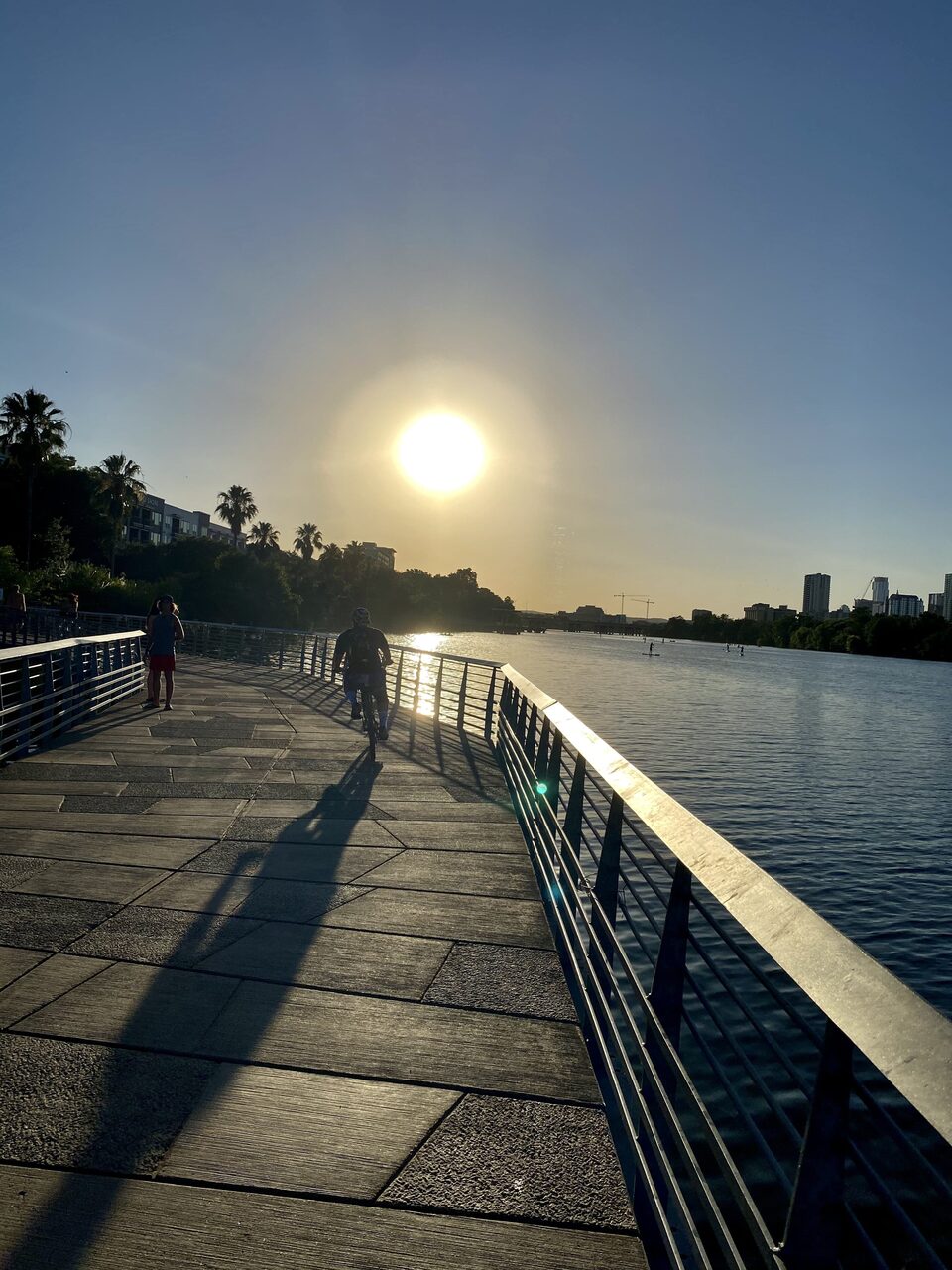
Barton Springs holds 68° all year, so lap swimming never stops. The Hike-and-Bike Trail rings Lady Bird Lake for ten flat, shaded miles. The greenbelt, the parks and dozens of senior and rec centers mean movement is the default here, not a chore you schedule.

Every pace
From a front porch to a downtown balcony
Some retirees want a single-story home on a cul-de-sac in Georgetown; others want to sell the house, buy a condo, and never mow again. Austin has both, plus everything between, and a cooling housing market has started to give buyers a little more room to choose.
Eyes open
What to weigh before you move
Austin rewards a clear plan. Here's where to dig into the numbers that decide whether it works for you.
Cost of living & taxes
No state income tax, but property taxes and home prices run higher. How the math actually nets out for retirees.
The housing market now
Prices have cooled from the peak. What a shifting market means if you're buying, selling, or renting first.
Healthcare & services
Major hospital systems, specialists, senior centers and in-home care, and where they cluster.
From the news desk
Latest on retiring in Austin
We track senior living, housing and the cost of life here so you don't have to. A few recent reads:
Austin home prices are dropping
Good news if you're buying, what a cooler market means for retirees.
Resort-style senior living in Leander
A new active-adult community brings amenity living north of Austin.
Leander's new senior center opens
More public space for active-adult programs just north of the city.

Your next chapter
Make Austin home
Neighborhoods, numbers, and the honest trade-offs, all in one place, kept current. Start with the questions most people ask first.